
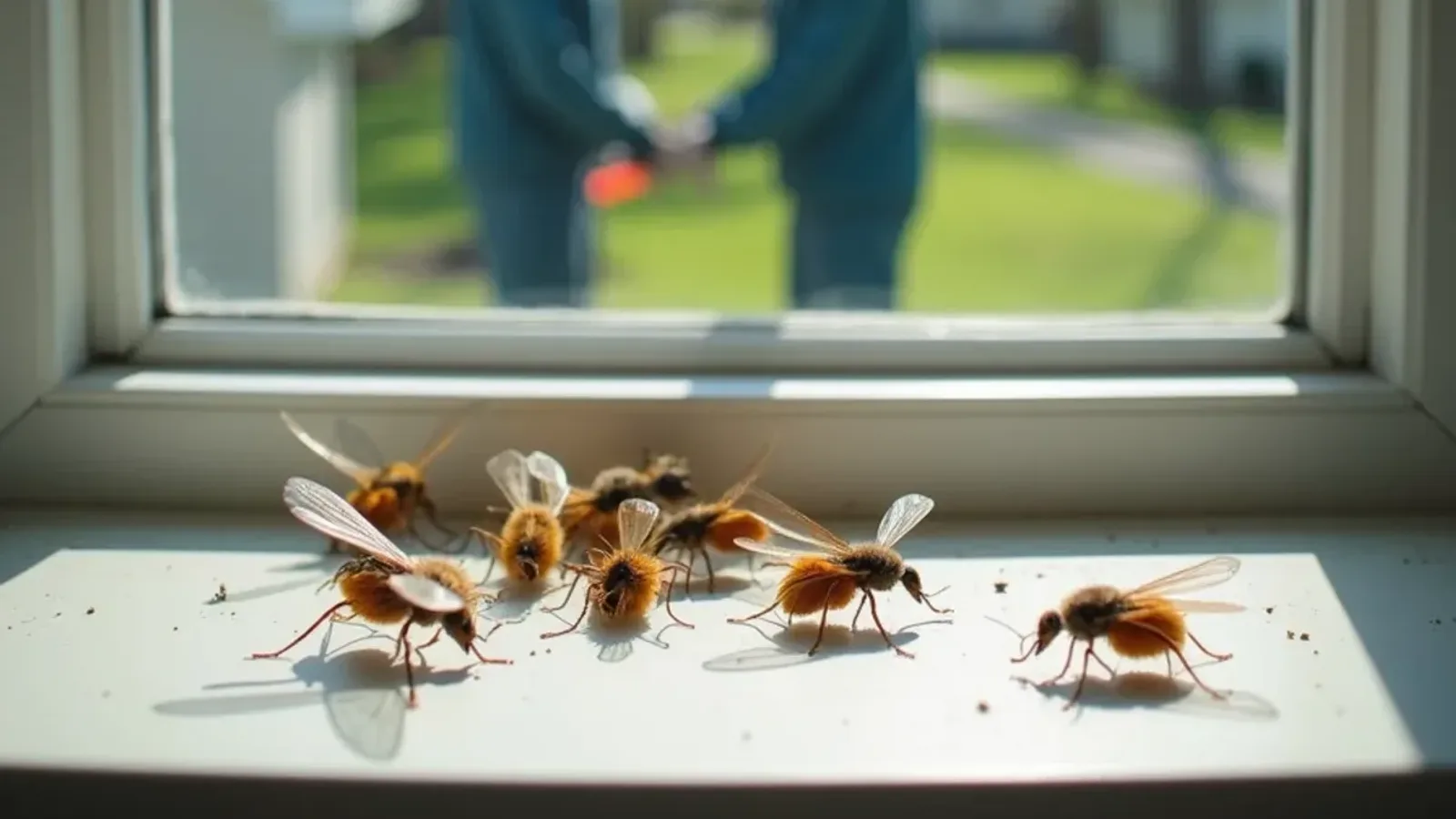
What does it mean when termites fly out in spring?
Winged termites are called swarmers or alates. They are the reproductive members of a mature colony, and they leave the nest in spring to start new colonies. In southern Indiana, the swarm season usually peaks in spring on warm, humid days, often after rain, and it can happen at any time of day.
A swarm is a colony announcing itself. Subterranean termites, the main threat in this region, live in the soil and feed on wood hidden from view. By the time winged ones appear, the colony has typically been established for years, which means it has been feeding well before you saw a single insect.
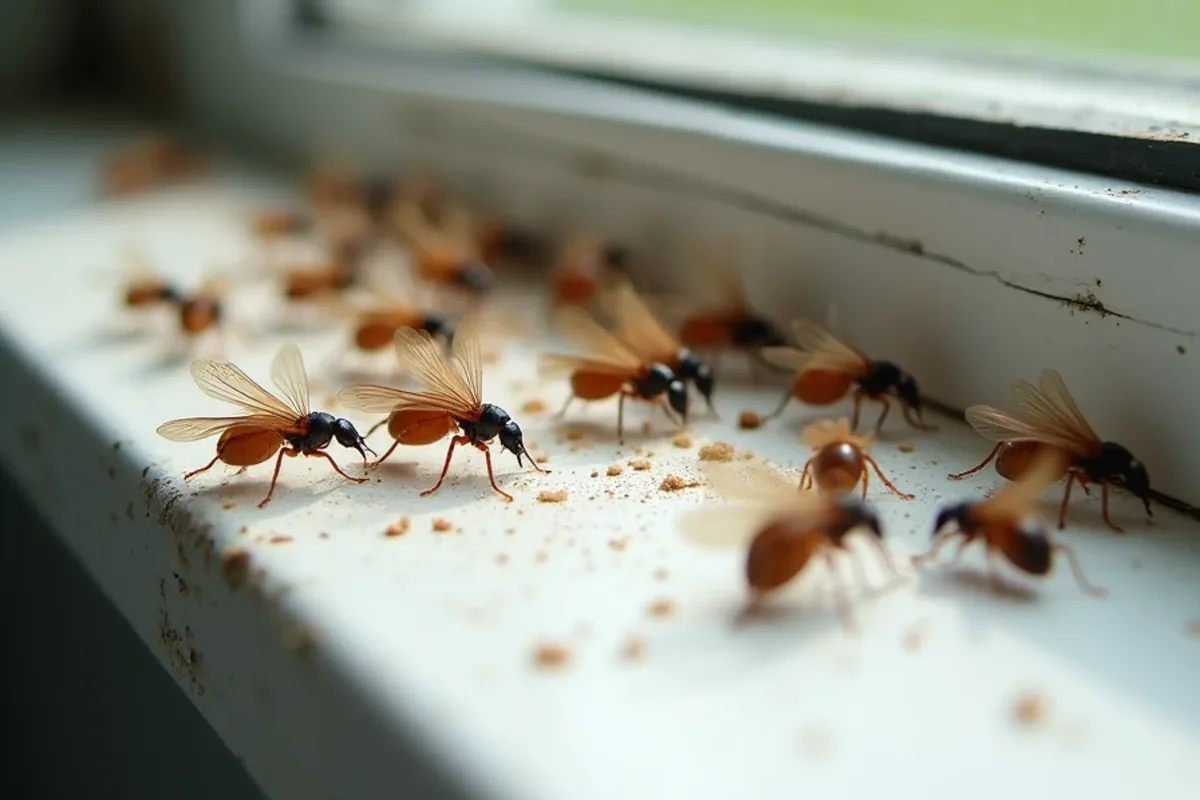
What matters most is where you find them. Swarmers outdoors suggest a colony somewhere near the house. Swarmers indoors, especially around windows, doors and the basement, suggest the colony may be inside or directly under the structure. Indoors is the more worrying sign.
Swarmers are drawn to light, so they pile up in predictable places. Check these first:
- Window sills and the glass behind curtains, where they gather and shed wings.
- Basement and crawl space floors near the foundation walls.
- Around sliding doors and light fixtures after dark.
- Spider webs near the foundation, which often hold wings and bodies.
- Garage corners, porch ceilings and the base of attached decks.
Need it handled now?
Call Miller's at (321) 496-4080 for same-day help in the Hayden area.
Are they flying termites or flying ants?
Flying ants and winged termites get mixed up all the time. They swarm in the same season and look alike at a glance. Three features separate them, and you can check them with your eyes or a phone camera.
| Feature | Termite swarmer | Flying ant |
|---|---|---|
| Antennae | Straight, beaded, like a string of tiny beads | Bent or elbowed |
| Waist | Broad, no pinch between thorax and abdomen | Pinched, with a thin waist |
| Wings | Four wings of equal length, long and milky | Front pair longer than the back pair |
| Body color | Dark brown to black, or pale and tan | Black, red or brown |
| Shed wings | Piles of wings on sills and floors | Fewer shed wings, often none |
| Behavior | Flutter weakly, drop wings quickly | Stronger, more direct fliers |
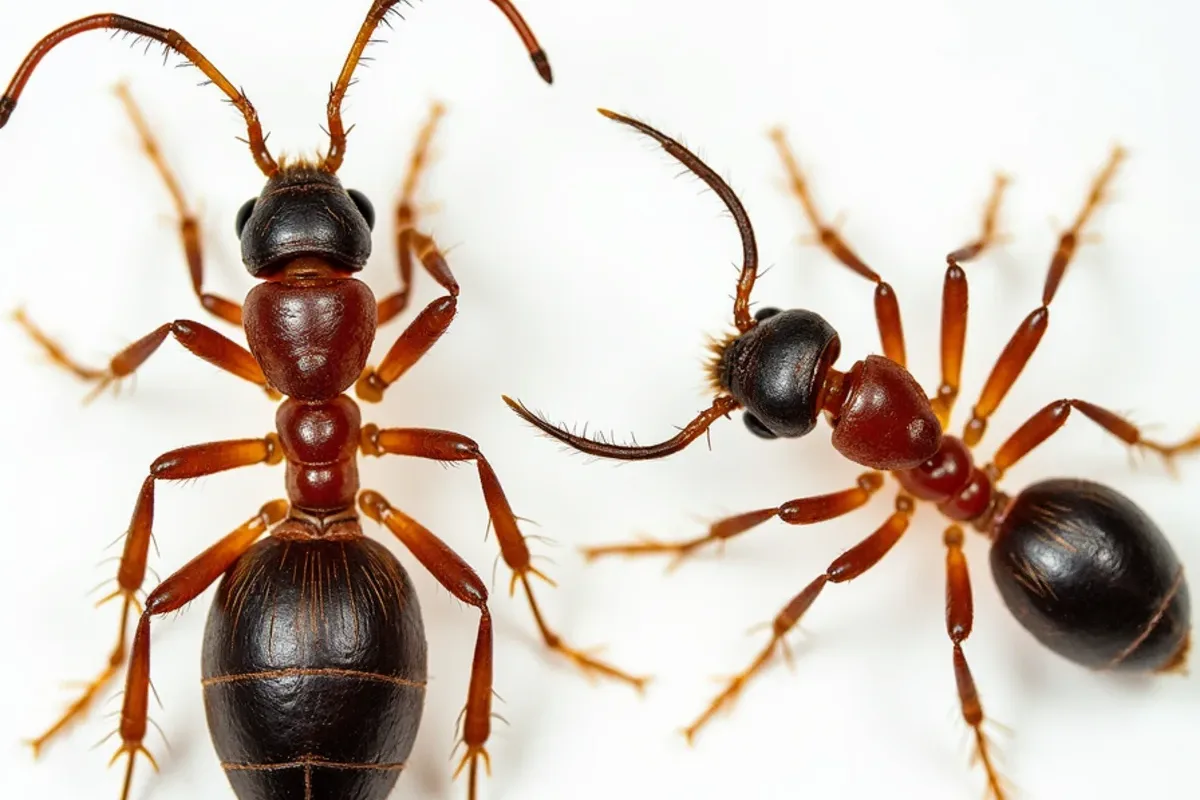
Carpenter ants also swarm and are easily mistaken for termites. If you want the full comparison, see our guide on carpenter ants versus termites. Both are wood-damaging pests, but the treatment is different, so a correct ID matters.
Do not guess from one insect
A single bug on a windowsill could be a harmless outdoor ant that wandered in. A pile of identical, pale wings is a different story. Termites shed their wings within minutes of landing, so wings with no bodies are strong evidence of a swarm indoors. Save what you find in a jar or on clear tape.
What should you do right now?
A calm, short checklist is better than a frantic one. Swarms last from a few minutes to a couple of hours, and the insects die quickly without a colony to support them. Your job is to record the evidence. Take a few photos, even blurry ones, since they help an inspector understand the scale of the swarm.
Resist the urge to open windows to let them out. Swarmers drawn to light will simply cluster there, and open windows can let more in from outside. Turn off lights near the swarm and let them settle where you can collect them.
Collect a sample
Place a few insects and wings in a clear jar or on tape. Termites must be identified up close, and a photo with a coin for scale also helps.
Vacuum the swarmers
Use a vacuum to clear the insects and wings, then empty it outside. Do not crush them into the carpet.
Note where they appeared
Write down the rooms, windows and floor areas. A swarm that emerges from a baseboard or a floor crack points straight to the entry.
Look for mud tubes
Check the foundation, crawl space and basement walls for pencil-wide dirt tubes. Photograph them. Do not break them.
Do not rely on spray
Killing swarmers does nothing about the colony. Over-the-counter sprays can also scatter workers away from where a treatment would reach them.
Book an inspection
A trained eye can find the source, the scale and the best treatment approach.
Does it matter whether they were inside or outside?
It matters a lot. Swarmers that emerge outside near the foundation tell you a colony is close to the house. Swarmers that emerge inside tell you termites are already in contact with the structure.
In a lot of older homes around Jennings County, the signs are subtle. Stone and block foundations, damp crawl spaces and wood touching soil give termites an easy route in. The first obvious clue is often a spring swarm in the basement.
A professional termite inspection is the right next step in either case. The inspector looks at the foundation, sill plates, joists and wood in contact with soil, then explains what is active and what is old.
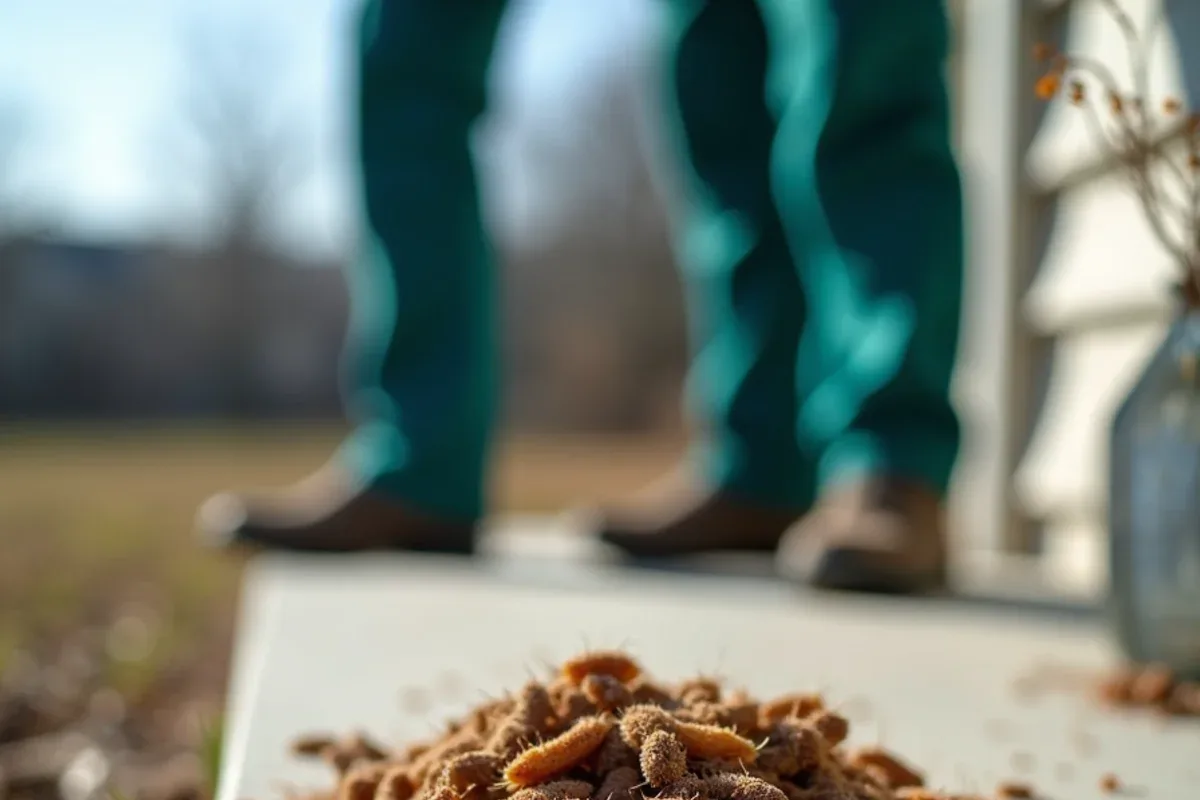
If activity is confirmed, termite control usually means a liquid soil barrier, bait stations or a combination. The method depends on your foundation, the amount of activity and how the home is built.
How much damage is a colony likely to have caused?
There is no way to know from the swarm alone. A colony that produces swarmers is mature, so it has had time to feed. That said, termites eat slowly, and many homes catch the problem before structural failure.
Termites eat wood along the grain and leave a thin outer layer. Damaged boards may look fine on the surface and sound hollow when tapped with a screwdriver. Honeycombed galleries packed with soil and a layered, mud-like texture are classic signs.
The honest answer is that the inspection will tell you. Some homes show active termites with little visible damage. Others show old damage with no live termites left. Treatment stops the activity, and a contractor handles any repairs.
What happens after the swarm is over?
The swarm ends but the colony does not. Workers keep feeding on wood day and night, hidden inside soil and framing. A gap of days or weeks between seeing winged termites and booking an inspection gives the colony more time, so do not wait for the next one.
Homeowners along the US-50 corridor, from Hayden toward Seymour, often see swarms in clusters of a few days when a warm spell follows rain. If your neighbors see them, you are likely in the same pressure zone. That is a good reason to schedule an inspection before the next spring.
In the meantime, reduce moisture and wood-to-soil contact. Move firewood and lumber away from the foundation, fix leaking gutters and downspouts, and keep mulch a few inches below siding. These steps do not replace treatment, but they make your home less attractive.
Frequently asked questions
Do flying termites mean my house has termites?
What is the difference between a flying ant and a flying termite?
When do termites swarm in Indiana?
Can I spray swarmers and be done?
Seeing winged termites in the house is unsettling, but a quick response protects your options. Save a sample, document where they appeared, skip the spray and get the foundation inspected. If swarmers showed up in your home this spring, call Miller's at (321) 496-4080 and we will help you find the source.