
How can you tell carpenter ants and termites apart?
Both insects damage wood, both swarm in spring, and both can show up as winged insects on a windowsill. Telling them apart is worth the effort because the treatments are very different. Use the table to compare what you are seeing.
| Feature | Carpenter ant | Termite |
|---|---|---|
| Antennae | Bent, elbowed | Straight, beaded |
| Waist | Pinched, thin | Broad, no visible pinch |
| Wings (swarmers) | Front pair longer than back pair | Four wings of equal length |
| Body color | Black, red or black-and-red | Pale cream workers; dark brown to black swarmers |
| Size | Large, often a quarter to a half inch | Workers small; swarmers about a quarter inch |
| Eats wood? | No, it tunnels and nests | Yes, it digests the cellulose |
| Debris | Coarse frass like sawdust with insect parts | Mud tubes and soil-packed galleries |
| Wood texture | Smooth, clean-cut galleries | Rough, layered, packed with soil |
| Active | Often at night | Constantly, hidden inside wood and soil |
If you caught the winged insects, our guide to flying termites in the house walks through the swarmer comparison in more detail.
Need it handled now?
Call Miller's at (321) 496-4080 for same-day help in the Hayden area.
What does the damage look like?
The wood itself often tells the story faster than the insect. If you can safely open a damaged section or probe it with a screwdriver, the pattern is easy to read.
Carpenter ant damage
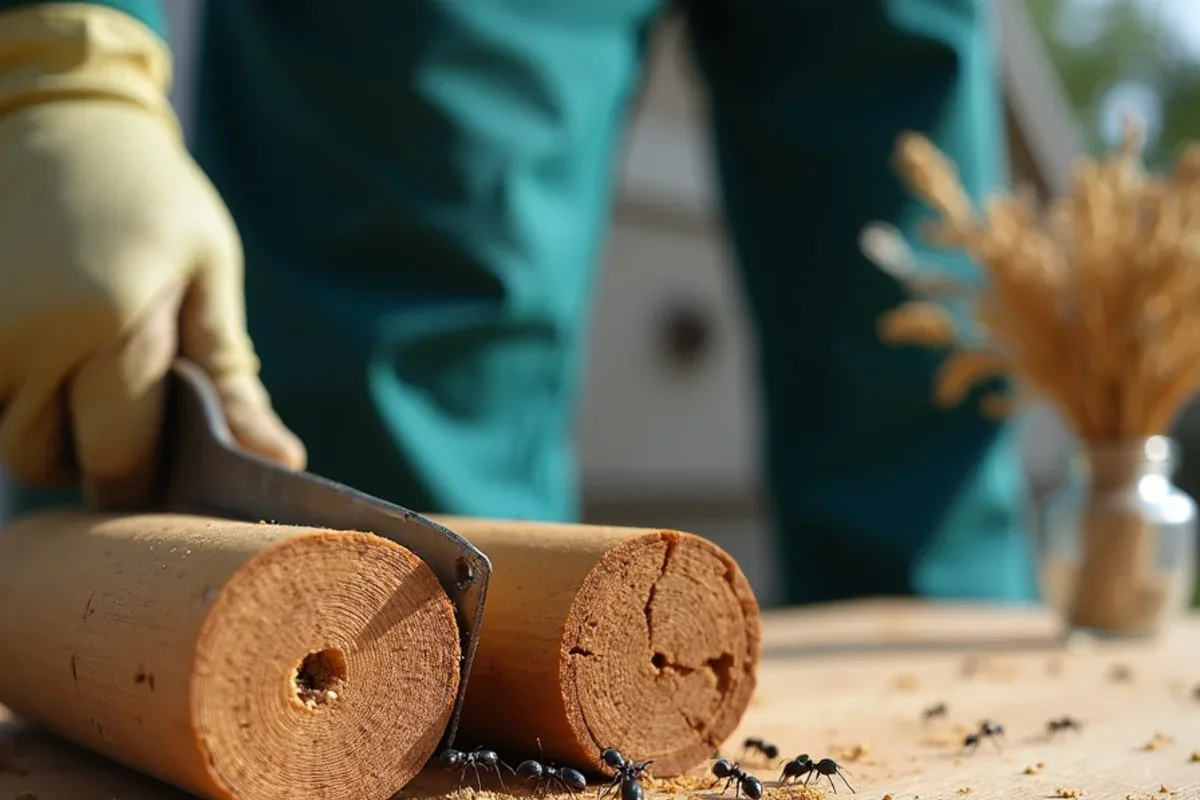
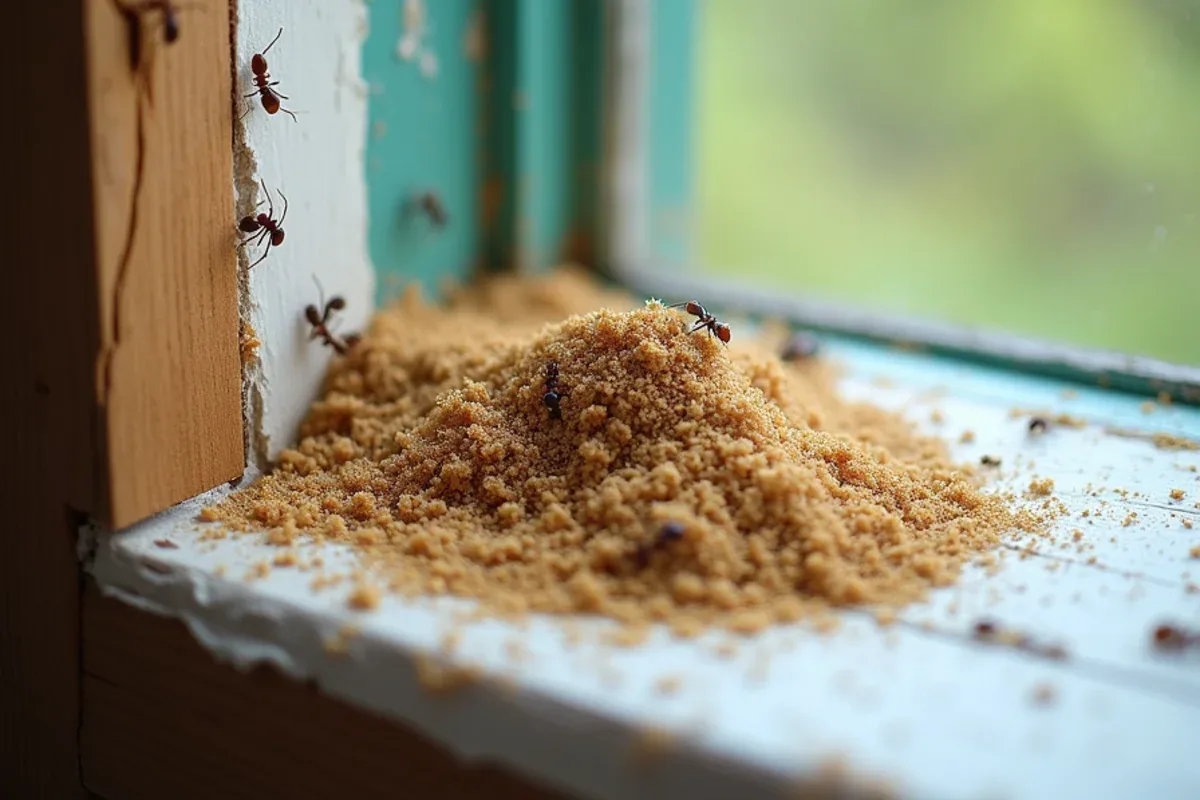
Carpenter ants excavate wood to build nests, but they do not eat it. They push the shavings out of small kick-out holes, which collect below as frass. The frass looks like coarse sawdust mixed with dead insect parts. The galleries inside are smooth and clean, almost sanded.
Termite damage
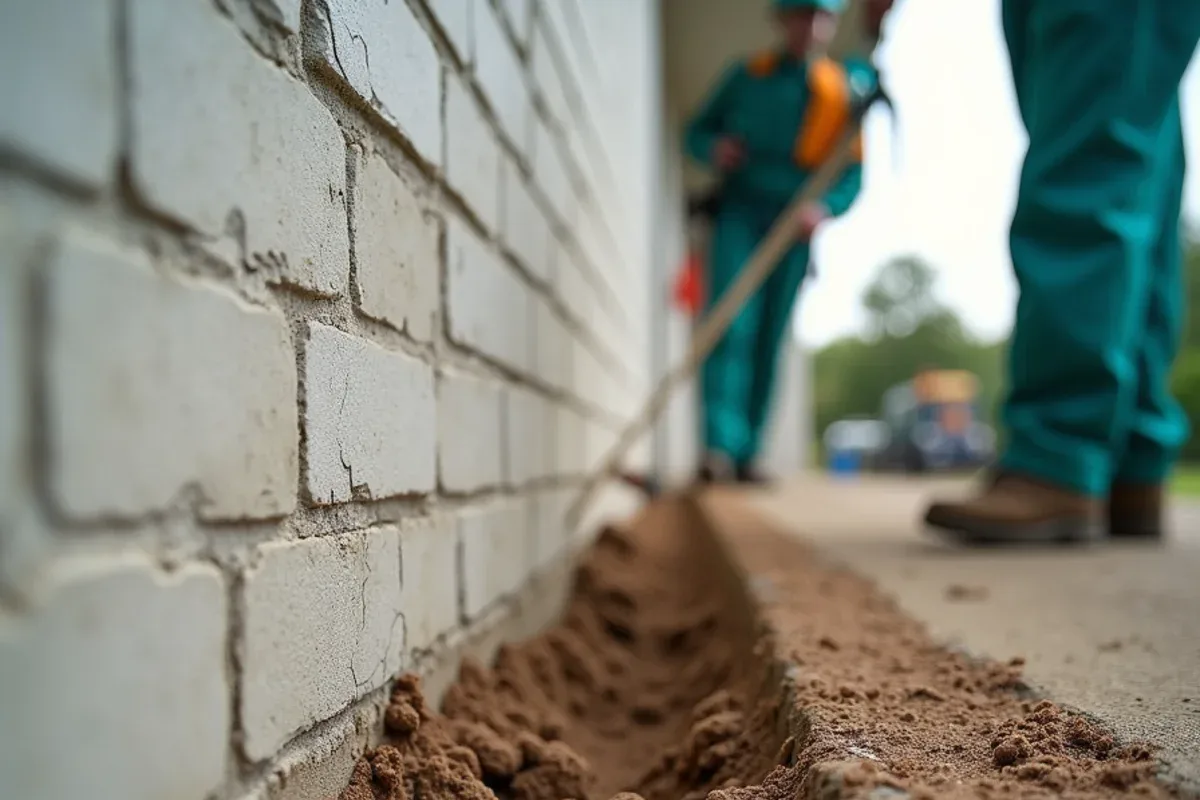
Subterranean termites eat the soft wood and leave the harder grain, creating a layered look. Their galleries are rough and often packed with soil or mud-like material. Termites also build pencil-wide mud tubes up foundations and across sill plates to protect themselves from air.
A bonus clue is the sound. A faint rustling in a wall at night can point to carpenter ants. Sounds are not definitive, so treat them as a reason to look, not a diagnosis.
A common mistake
Homeowners spot a few large black ants in the kitchen and assume the nest is somewhere else. Foragers can travel a hundred feet or more from the nest, so the ants you see may be coming from a tree or a woodpile. But sawdust-like frass inside the house means the nest is inside too. Killing foragers without finding the nest changes nothing.
How do carpenter ants and termites live differently?
Their habits explain why the treatments differ. Carpenter ants are nest builders. A main colony in a tree stump, fence post or woodpile may send workers to satellite nests inside a home. Moist or rotting wood there gives them an easy start. They favor wood softened by leaks around windows, roofs, bathrooms and decks.
Subterranean termites are soil-dwelling feeders. The colony lives underground and travels to your house through mud tubes or hidden cracks, then feeds on structural wood around the clock. Termites do not need pre-damaged wood, though damp wood draws them in.
That difference matters for control. Finding and treating the carpenter ant nest, plus fixing the moisture that attracted it, usually solves the problem. Termites require treating the soil around the foundation, or placing bait stations, because the colony lives out of sight.
Carpenter ants also keep a parent colony outdoors, which is why a treated indoor nest can be followed by new ants from the yard. Part of a good plan is hunting down that outdoor source, often a rotting stump, a wet woodpile or a hollow tree limb. Cutting off the supply line matters as much as treating the visible nest.
When do you usually notice each one?
Seasons offer a clue. Both pests swarm in spring, but they are noticed at different times and in different places. Use the timeline as a rough guide, not a rule.
- Late winter to early spring: carpenter ant workers appear indoors on warm days, often in kitchens and bathrooms.
- Spring: termite swarmers emerge, often on warm days after rain. Carpenter ant swarmers also appear indoors if a nest is inside.
- Summer: carpenter ant foragers trail along fences, tree limbs and power lines toward food. Termites keep feeding unseen.
- Fall: damaged wood shows up during projects like deck repair, window replacement or remodeling.
Large ants in your house in late winter are a particular warning. Outdoor ants are mostly dormant then, so an ant walking across a kitchen floor in February is probably living inside. That is a good reason to look for moisture and frass right away.
Remember that having one pest does not rule out the other. Moisture-damaged wood can host both, and a thorough inspection checks for each.
What should you do if you find one?
Take a few minutes to gather evidence before you call. It helps whoever comes to your house see the problem, and it keeps you from making it worse.
Photograph what you see
Take pictures of the insects, the frass, the mud tubes and the damaged wood. A coin beside the insect shows scale.
Save a sample
Collect a few insects in a jar or on clear tape. Check the antennae and waist if you can.
Do not disturb mud tubes
Leave them in place so the inspector can see the activity.
Look for moisture
Check roof flashing, window frames, plumbing leaks and wet crawl space areas. Moisture is a major driver for both pests.
Avoid spraying
Repellent sprays scatter ants and termites and make nests harder to find.
Call for an inspection
A trained technician can find the nest or the colony and explain your options.
If it is a carpenter ant problem, our ant control service locates nests and treats them directly. If it points to termites, termite control addresses the colony in the soil. A correct ID saves you from paying for the wrong treatment.
How do you keep both away from your home?
The same few habits cut the risk of both. They revolve around moisture, wood contact and gaps. None cost much, and together they can make a house far less appealing.
- Fix leaking roofs, gutters, window frames and plumbing so wood stays dry.
- Keep firewood, lumber and mulch away from the foundation, and off the ground.
- Trim branches and shrubs that touch siding or the roof, since ants use them as bridges.
- Remove old stumps, rotted fence posts and dead trees near the house.
- Seal gaps around pipes, utility lines and trim where ants and termites enter.
- Keep crawl spaces ventilated and dry, with vapor barriers where needed.
Wooded properties need extra attention. Homes with trees close to the roofline, like many lots at Country Squire Lakes and the hilly, forested streets around Nashville, are natural carpenter ant territory. A yearly check of the roofline, decks and crawl space is a smart habit.
Frequently asked questions
What is the fastest way to tell a carpenter ant from a termite?
Do carpenter ants eat wood like termites?
What does carpenter ant frass look like?
Which is more serious, carpenter ants or termites?
Carpenter ants and termites can look alike at first glance, but the details tell them apart: antennae, waist, wings, frass and mud. Identify the pest first, then fix the moisture and treat the source. If you have found wood damage or winged insects, call Miller's at (321) 496-4080 and we will help you sort it out.