
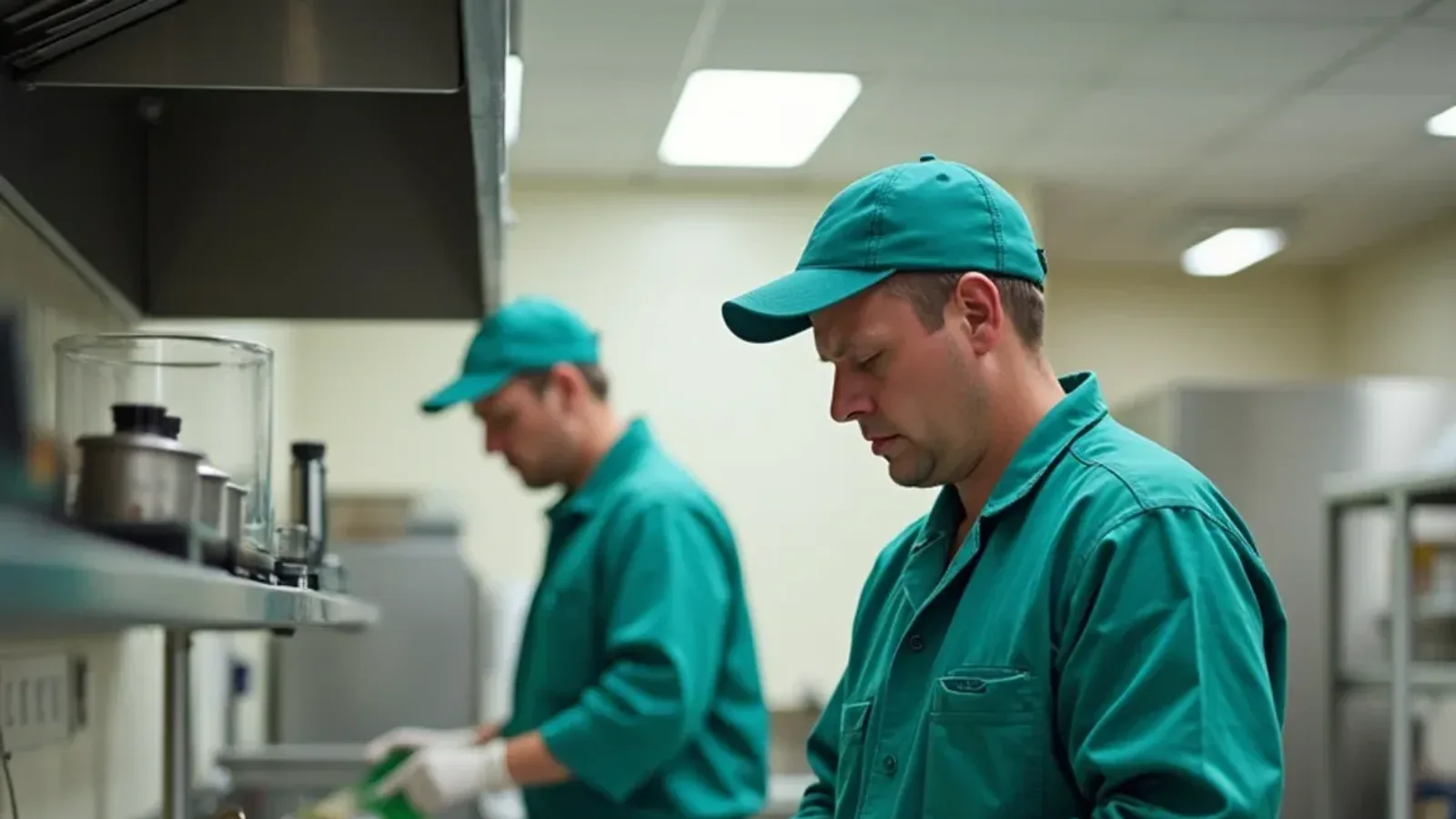
What does a health inspector look for in a restaurant?
In Indiana, restaurant inspections are handled by the county health department under the state's retail food establishment rules. The inspector is not hunting for a pest problem so much as for conditions that allow one. A kitchen can have no visible roach and still lose points for a gap under the back door.
Expect the walk-through to follow the food. Receiving area, dry storage, walk-in cooler, prep line, dish pit, trash area. At each stop the inspector is asking the same questions: can a pest get in, can it eat here, can it hide here.
- Evidence of activity: live or dead insects, droppings, gnaw marks, grease rub marks along walls.
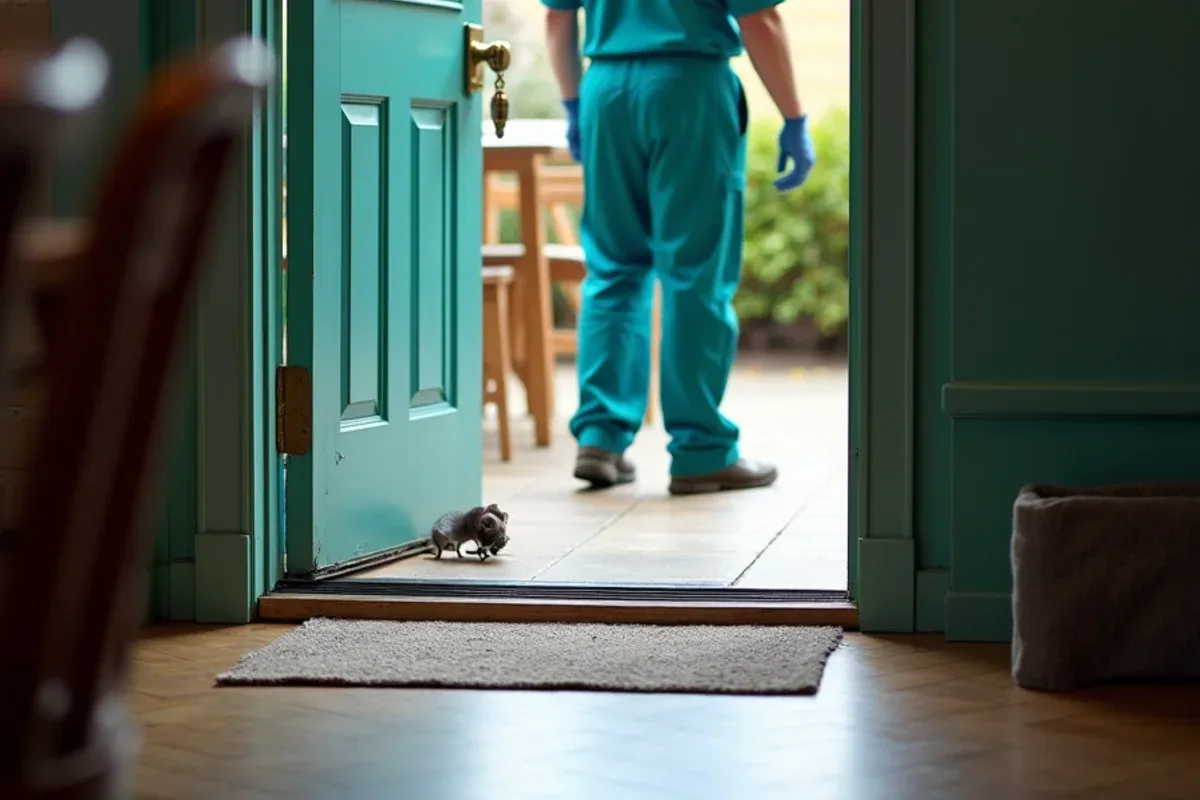
- Entry points: door gaps, missing screens, open vents, holes around pipes and conduit.
- Food and water: spills, crumbs under equipment, standing water, uncovered or floor-level food storage.
- Harborage: clutter, cardboard stacks, unused equipment and cracked wall or floor coves.
- Proof of control: a pest program, service records and open-door practices that match what is on paper.
Need it handled now?
Call Miller's at (321) 496-4080 for same-day help in the Hayden area.
Roaches, rodents and flies: the three pests that cost points
Most restaurant violations trace back to three groups. Each leaves a different signature, and each needs a different fix. Treating them all with the same spray is how kitchens end up paying for repeat visits.
Cockroaches
German cockroaches are the kitchen specialist. They stay within a few feet of food and water, hide in tight cracks, and reproduce fast. Look near the dish machine, under the three-compartment sink, and inside the hinges of reach-in coolers. Gel baits and crack-and-crevice work do the heavy lifting, and our cockroach control service is built around that approach.
Mice and rats
Rodents come in through gaps as small as a dime for mice. They follow walls, so droppings collect along baseboards, behind the fryer and at the edges of dry storage. Inspectors check the dumpster pad and back door first, because that is where the trail starts.
Flies
House flies come in on open doors and from the dumpster. Fruit flies breed in a sour mop bucket or a drain with a film of old food. Drain flies breed inside the slime layer of floor drains. A fly in the dining room reads to a guest as a dirty kitchen, even if the cause is one unscrubbed drain.
| Pest | Where it shows up first | Common cause | Fix that sticks |
|---|---|---|---|
| German cockroach | Under dish machine, behind cooking line, in reach-in hinges | Warmth, moisture and grease on hidden surfaces | Deep cleaning plus gel bait and crack-and-crevice work |
| House mouse | Dry storage, behind fryers, along back walls | Door gaps and pipe penetrations | Seal gaps, then trap and monitor |
| Drain fly | Floor drains and mop sinks | Slime film inside the drain | Scrub with a brush and enzyme cleaner |
| Fruit fly | Bar, produce area, trash cans | Sour liquids and ripe food | Remove the source, clean the can, cover waste |
| House fly | Back door and dining room windows | Open doors and dumpsters | Close doors, add screens, bag trash tightly |
What records and IPM plan should you have on hand?
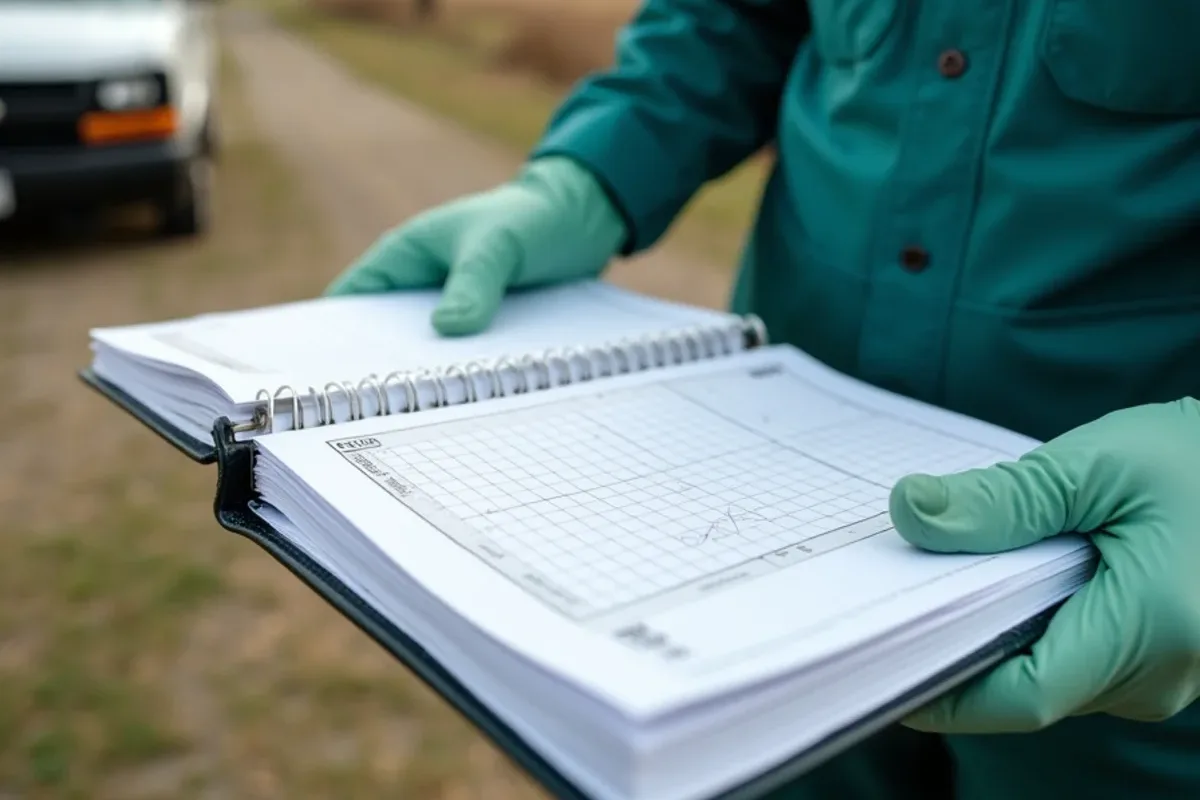
Integrated pest management, or IPM, means you prevent first and treat second. It matters to an inspector because it shows a system, not a scramble. A service binder that is current and honest does more for you than a fresh spray the morning of the visit.
A solid binder for a commercial pest control account holds these items:
- A service agreement or scope that names the pests covered and the visit frequency.
- Dated visit reports showing what was found, where, and what was done.
- A site map with monitor and bait station locations numbered.
- Product labels and safety data sheets for anything applied on site.
- A corrective-action log: gaps sealed, drains cleaned, trash practices changed.
- Staff notes on who reports sightings and how, so a problem reaches management fast.
Why more spraying is the wrong answer
A restaurant that sprays heavily before an inspection often looks worse on paper. Treatments with no findings log, no monitors and no exclusion work show a reaction, not a plan. One roach caught on a glue board in week two is better evidence of control than a kitchen with no records at all. Exclusion, sanitation and monitors do most of the work. Product is the backup.
A pre-inspection checklist for Seymour and Columbus kitchens
Operators in Seymour and Columbus share the same pressure. Busy seasons, older strip-mall buildings, shared walls with neighbors and delivery doors that open all day all invite pests. A weekly walk with this list catches most problems before an inspector does.
Walk the exterior first
Check the dumpster lid and pad, grease bin, back door sweep and any gap at the threshold. Trash that sits overnight in open containers feeds both flies and rodents.
Open every drain
Pull the floor drain covers and look for a slime film. Scrub with a brush and an enzyme cleaner. Bleach alone rarely clears the biofilm where drain flies breed.
Pull out what you can
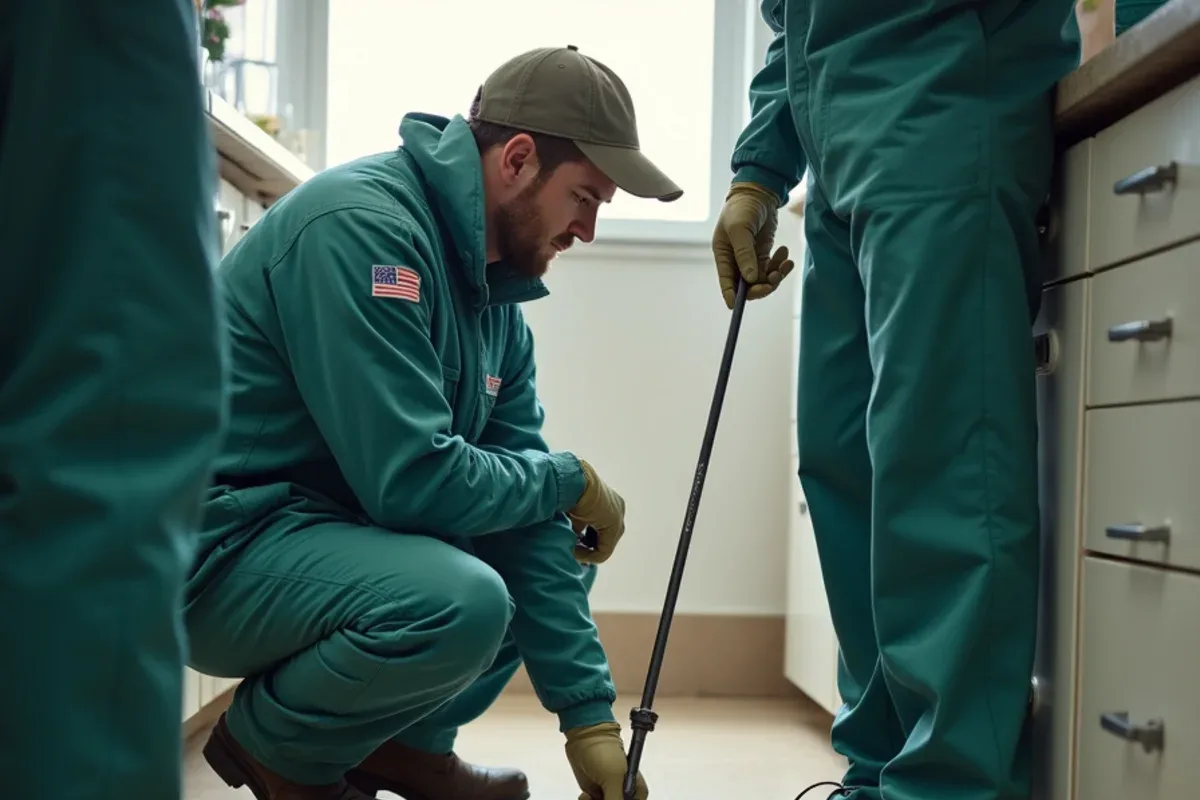
Slide out the reach-in, the fryer and the dish machine kick plate if you can. Roaches live in the warm, greasy gap behind and under them.
Check dry storage
Keep food off the floor, rotate stock, and break down cardboard quickly. Cardboard is both a hiding place and a roach egg carrier.
Inspect monitors and bait stations
Confirm every station is in place, labeled and free of damage. Write down any activity, even if it is just one insect.
Look up
Check ceiling tiles, vent covers and pipe chases. Rodents travel along overhead pipes, and a stained tile often marks a leak that feeds pests.
Update the binder
Make sure the latest service report is filed, and that any corrective action from the last visit has a date beside it.
What if a pest turns up before or during an inspection?
Do not hide it. Inspectors see many kitchens. An owner who is open about a problem and already working on it is in a better spot than one who denies it. Show the binder, point to the monitor that caught the pest, and explain what changed.
After a citation, the follow-up matters more than the finding. Get a service visit scheduled quickly, write down the cause, such as an unsealed gap or a floor drain, and fix that cause. Same-day service is often possible around Hayden and Seymour for urgent kitchen issues, which can help you show action before a re-inspection.
Staff habits are the other half of the fix. Cooks and dishwashers see pests first, and they are the people most likely to hide a sighting because they fear blame. Make reporting easy and free of punishment. A note on a whiteboard that says where and when a roach was seen gives the technician the lead they need.
Sealing is the part owners skip. Copper mesh and sealant around pipe penetrations, a fresh door sweep and a repaired screen cost little and stop the same pest from returning. Without them, any product treatment is only a pause.
Frequently asked questions
How often should a restaurant have pest control service?
Do I need pest control records for an Indiana health inspection?
What pest do Indiana restaurants fight most?
Can I treat a restaurant for pests myself?
A clean inspection is built on the weeks before it: sealed doors, scrubbed drains, honest records and a plan that finds pests early. Running a kitchen near Hayden, Seymour or Columbus? For a second set of eyes, call Miller's Termite and Pest Control at (321) 496-4080. We'll talk through your building.